Dr.Nicholas Njonjo
I'm a Kenyan doctor working where clinical medicine meets artificial intelligence. I coordinate research in primary care, build small tools that give clinicians a head start, and I'm building Afya Titans to train young Kenyans to build AI for our own setting.
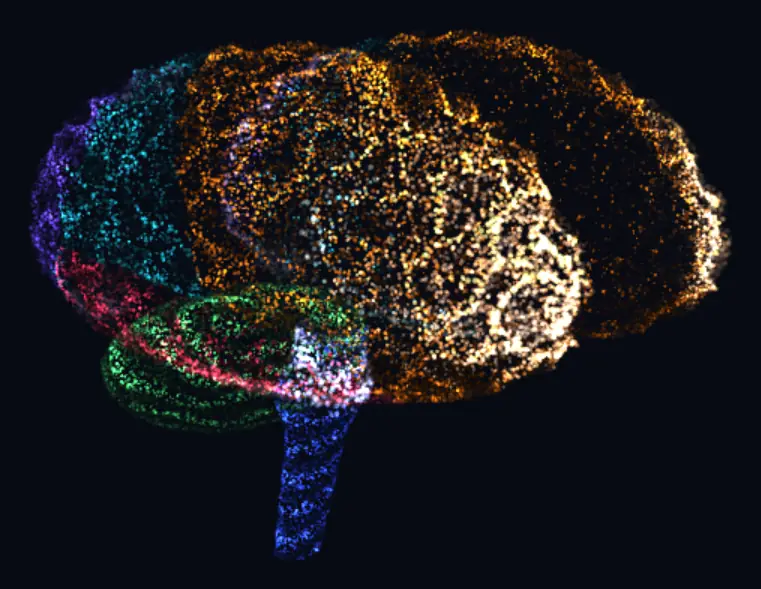
Drag the brain to rotate it. Each region opens a part of my work.
“Medicine made me see problems that technology might help us solve.”
In my own words

I studied medicine at the University of Nairobi and did my internship at PCEA Chogoria Hospital, rotating through internal medicine, surgery, paediatrics, and obstetrics and gynaecology. I'm now a licensed doctor and a research coordinator on silentMOOVE, working with six primary-care facilities in Nairobi and Kajiado.
My interest in AI grew out of the clinic. Kenya has too few doctors for its patients, and too much of a doctor's day goes to history-taking, paperwork and claim forms. I build practical tools for those gaps, and I care as much about testing them properly, in the places they will be used, as about building them.
Long term, I want to use AI to speed up biomedical research: understanding disease, better diagnostics, new treatments, and cellular and molecular work. I want African clinicians, patients and researchers involved from the first design meeting, not only at the end. AI for our setting, built with us.
Take a cell apart.
Dendritic cells patrol tissue, swallow what they find, cut it into fragments and show those fragments to T cells: capture, process, present. Scroll through the cell to follow one antigen the whole way. It is the order I borrowed for AfyaBrief: the patient's story is gathered and organised before the consultation, so the doctor starts from a clear summary.
Read a scan as frequencies.
In 2023 I wrote Python scripts with PyWavelets and OpenCV that turned brain images into Fourier and wavelet maps. The question: do scans from the same condition share a frequency pattern a model could learn? This is a live re-creation in your browser, on a synthetic slice. No patient data.
Low frequencies sit at the centre of the spectrum and carry the overall shape. The outer ring carries edges and fine texture. Shrink the window and watch the cortex blur first.
MRI is acquired in frequency space to begin with: the scanner fills k-space, and an inverse Fourier transform turns it into the picture a radiologist reads.
From print to prediction.
Each era of medicine changed how we see the body: woodcuts, X-rays, scans, records, and now models that learn from all of it. Scroll through five centuries in one field of dots.
Selected work.
Research I help run, tools I've built, and organisations I work with. Labels say where each one stands today, including the prototypes that still need clinical validation.
From first aid to clinical AI.
Most of what I do now started as volunteering: carrying a first aid kit, running sports leagues, building a health bot for a youth organisation.
Saltatory conductionOn a myelinated axon the signal jumps from node to node. Scroll, and it jumps through my path.
Kept current.
Clinical and surgical skills, research ethics, and the data and policy tools that decide whether a good idea reaches patients. Each certificate is mapped to a part of the chest. Scroll to take it apart, or pick a certificate to see where it sits.
Let's build what our clinics need.
If you work on AI for healthcare in Kenya, or anywhere with similar constraints, I'd like to hear from you: research collaborations, validation studies, or young people who want to learn to build.